
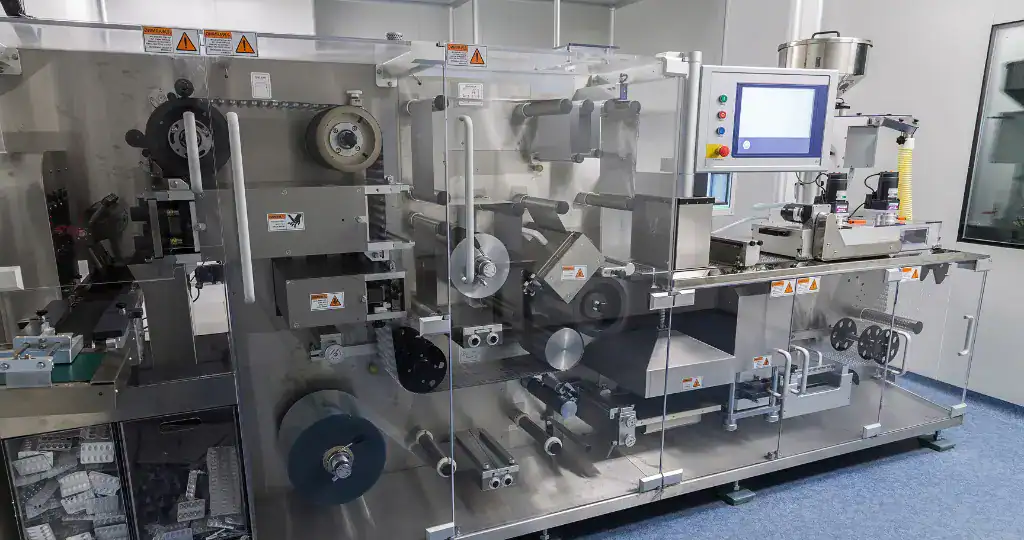
For OEMs producing high complexity capital equipment, deciding whether to manufacture in-house or outsource to a contract manufacturer is a strategic call with long-term consequences. This decision affects not just timelines and budgets, but also touches quality, compliance, and your ability to scale.
At Keller Technology Corporation, we work with OEMs who face this decision every day. While in-house manufacturing can be appropriate for some organizations, many customers find that outsourcing to a vertically integrated partner reduces risk and delivers greater agility. Here’s a practical framework designed to support OEMs evaluating outsourcing vs in-house manufacturing and determining the best path forward.
Key Factors to Consider
1. Equipment Complexity vs. Internal Capabilities
Start by evaluating the technical complexity of your system against your internal capabilities. High-complexity equipment often requires specialized processes and infrastructure, including:
Certified welding for frames and structures
Large envelope, multi-axis CNC machining capabilities
Cleanroom or vacuum-compatible assembly
Mechatronic and opto-mechanical assembly
Control system integration
If your team lacks the equipment, certifications, or experience to execute these processes reliably, outsourcing can bring in highly specialized expertise and infrastructure without the capital expense or time required to build it yourself.
2. Speed to Market and Program Flexibility
Contract manufacturers like Keller have the people, equipment, and supply-chain infrastructure in place to move quickly. In-house programs often compete for resources, staff, and floor space. Outsourcing allows parallel workflows across fabrication, machining, assembly and testing, reducing bottlenecks and compressing delivery timelines.
Additionally, external partners are better equipped to absorb design changes, volume fluctuations, and evolving program needs. When agility matters, outsourcing is often the faster and more scalable solution.
3. Cost Structure and Investment Risk
Building large, complex machinery in-house requires significant capital: real estate, equipment, staff, training, and quality systems. These fixed costs can be difficult to justify, especially for low- to medium-volume or high-mix programs. Outsourcing shifts this to a variable cost model. OEMs only pay for what they need when they need it. It also reduces the burden of managing procurement, logistics, inspection, quality assurance, and rework internally, further lowering the total cost of ownership.
4. Quality, Documentation, and Compliance
High-end equipment for industries like medical, semiconductor equipment, and fusion energy must meet rigorous standards for traceability, safety, and performance. Keller Technology is ISO 9001 and ISO 13485 certified, with extensive experience in FDA-adjacent manufacturing, ASME-coded fabrication, and complete traceability.
We provide structured quality documentation, FAT protocols, and clean assembly environments – all backed by established internal processes and audits. Outsourcing ensures compliance without adding workload to your internal team.
Is Outsourcing Right for You?
Outsourcing isn’t right for every project; but for OEMs building complex machinery under tight timelines, with demanding specifications, and a need for flexibility, it’s often the smartest choice. By partnering with an experienced contract manufacturer like Keller Technology Corporation, you gain access to vertically integrated capabilities, deep technical expertise, and a proven track record in complex system builds.
If you’re exploring outsourcing vs in-house manufacturing for your next equipment build, our team is here to help you evaluate the options and deliver results.