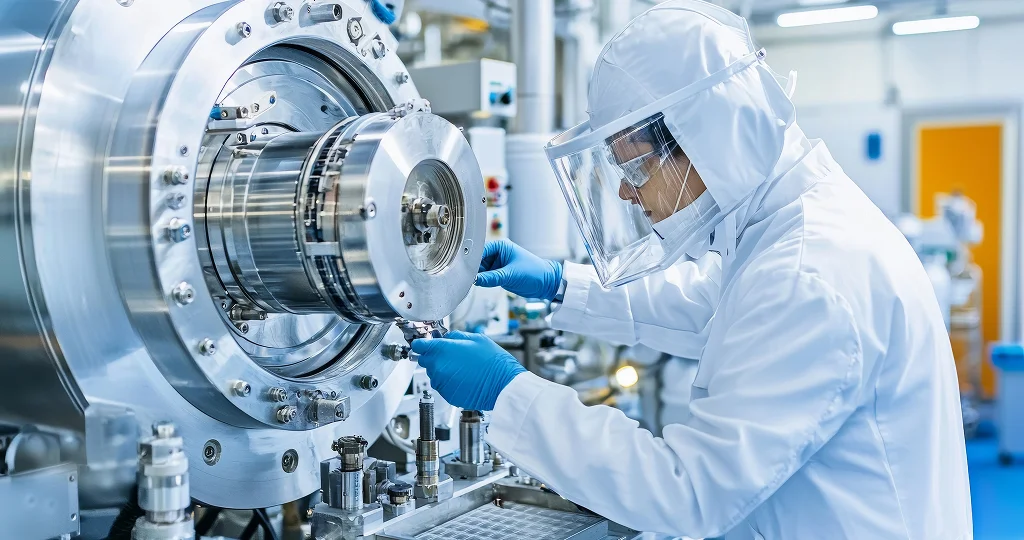
When you are building equipment that operates in high vacuum or ultra-high vacuum (UHV) environments, vacuum leak testing is not just another inspection step. It is one of the most critical parts of the process.
Even a small leak can compromise performance, contaminate sensitive processes, or lead to costly troubleshooting after installation. For that reason, leak testing needs to be treated with the same level of discipline as machining, welding, and assembly.
At Keller Technology, we work with customers who depend on vacuum integrity. The most successful projects treat vacuum leak testing as an ongoing process, not a single checkpoint at the end.
Why Vacuum Leak Testing Matters
In high vacuum and UHV systems, performance depends on maintaining extremely low pressure levels. Even very small leaks can affect:
- Process stability
- Measurement accuracy
- Contamination control
- Pump-down time
Leak testing is not something to leave until final inspection. It needs to be built into the manufacturing process from the start to reduce the risk of rework, delays, and performance issues after installation.
Common Leak Testing Methods
The most widely used method is helium mass spectrometry. Helium is inert, easy to detect, and effective for identifying very small leaks in high vacuum and UHV applications.
Depending on the system, testing may include:
- Vacuum testing, where the part is evacuated and helium is applied externally
- Pressure testing, where helium is introduced internally and detected outside
- Sniffing techniques, used to locate specific leak points
The right method depends on the design, accessibility, and required sensitivity For complex assemblies, choosing the right vacuum leak detection method early can help confirm the required vacuum leak rate without slowing the project later.
Best Practices for Reliable Results
Start with Design
Leak testing success begins at the design stage. Good designs consider:
- Weld accessibility
- Joint geometry
- Minimizing trapped volumes
- Material and surface finish selection
In design & build projects, these issues can be addressed early. In build-to-print work, reviewing the design before fabrication can prevent avoidable problems.
Control Welding Quality
Most leaks occur at welds, so consistency is critical. That includes:
- Qualified weld procedures
- Proper fit-up and preparation
- Controlled heat input
- Intermediate inspections
Strong welding practices reduce the need for rework later and help support long-term vacuum integrity.
Test in Stages
Waiting until final assembly to test is a common mistake. By then, access is limited and repairs are more difficult.
A better approach is to:
- Test subassemblies before full integration
- Check critical welds during fabrication
- Verify performance at multiple points
This helps identify issues early and keeps the project on track. Staged vacuum leak testing also gives teams more opportunities to isolate issues before they are buried inside a larger assembly.
Maintain Cleanliness
Contamination can interfere with leak detection and create unreliable results. To avoid this:
- Use appropriate cleaning methods
- Handle parts carefully during assembly
- Maintain controlled conditions when required
Clean surfaces lead to more accurate testing and more reliable vacuum chamber testing results.
Use Proper Equipment
Leak detection equipment must be suitable for the required sensitivity and properly maintained.
Best practices include:
- Regular calibration
- Verifying test setups before use
- Using known leak standards to confirm performance
Without this, results can be misleading. For helium leak testing or helium mass spectrometer leak testing, equipment condition and setup are especially important because these methods are often used to detect very small leak paths reliably.
Document the Process
Leak testing should always be documented. Typical requirements include:
- Verified leak rates
- Test methods used
- Calibration records
- Traceability to specific components
Clear records support acceptance and future troubleshooting. They also help customers understand how the system was tested and whether the results meet project requirements.
Common Challenges in High Vacuum and UHV Leak Testing
Even with a solid process, certain issues come up regularly:
- Complex geometries that limit access
- Large fabrications where distortion affects sealing surfaces
- Mixed materials with different thermal behavior
- Very tight leak rate requirements
Experience helps teams anticipate these challenges and address them early. For high vacuum leak testing and UHV leak testing, that experience can be the difference between finding a problem during fabrication and discovering it after installation.
How Keller Technology Approaches Leak Testing
At Keller Technology, leak testing is integrated into our overall precision fabrication and assembly process.
We focus on:
- Reviewing designs for testability
- Applying consistent welding practices
- Performing staged leak testing
- Maintaining cleanliness standards
- Delivering traceable test results
Whether the project is design & build or build-to-print, the goal is the same: deliver a system that meets performance requirements the first time. For projects involving custom vacuum chambers, this means considering testability, cleanliness, and documentation throughout the process rather than only at final inspection.
The Bottom Line
Leak testing is not just about finding defects. It is about confirming that a system will perform reliably in a demanding environment.
For high vacuum and UHV systems, that means a disciplined approach from design through final test.
When handled correctly, vacuum leak testing reduces risk and helps ensure equipment performs as expected from day one. To discuss vacuum chamber testing or leak testing requirements for an upcoming project, contact Keller Technology.